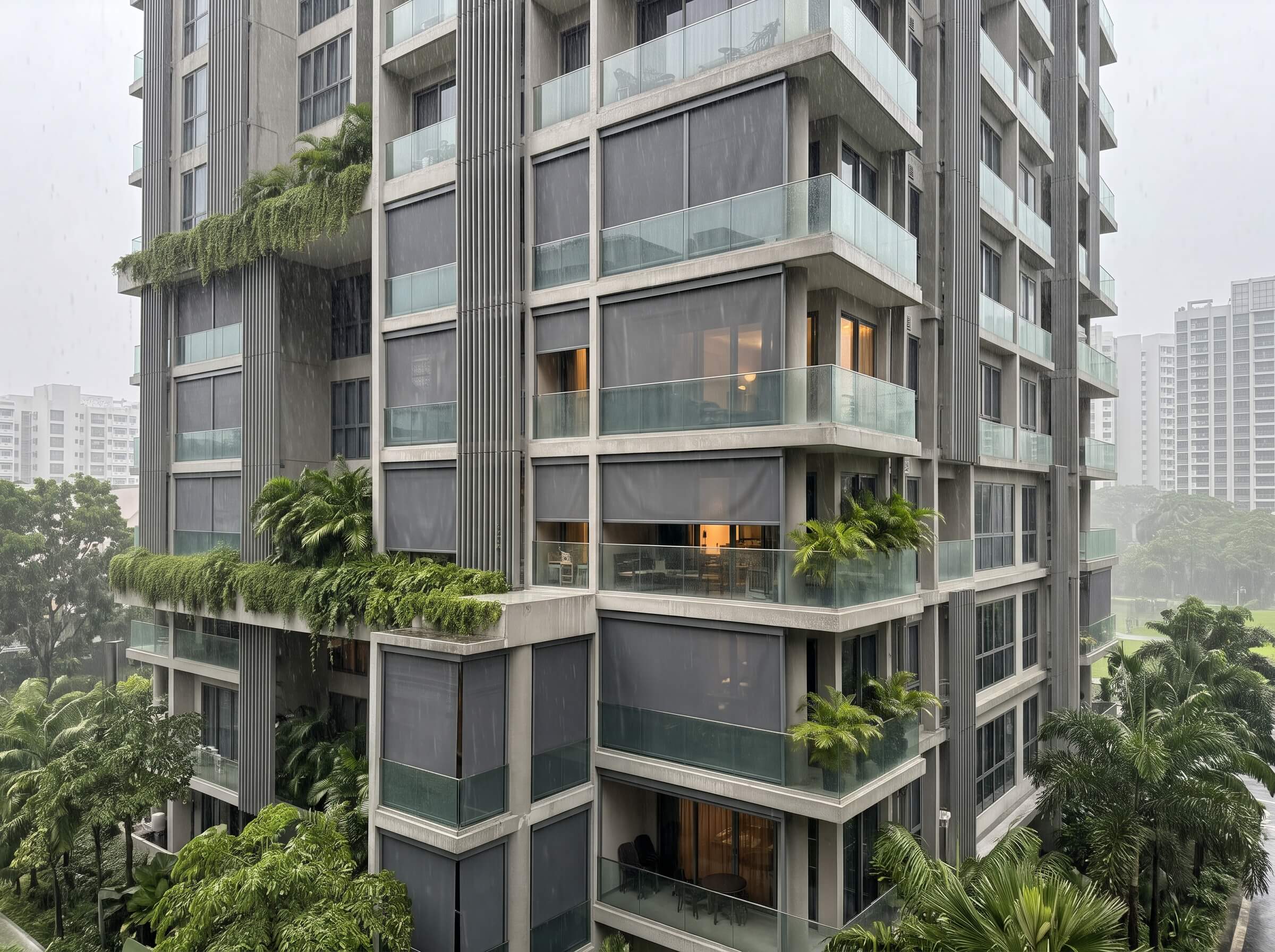
In an HDB flat, window and balcony work mostly comes down to following HDB's own guidelines. A condo adds a second layer that catches many owners off guard: your balcony and windows face a shared façade, so even changes inside your own unit's boundary usually need the sign-off of your building's management — the MCST.
The good news is that most of what homeowners want to do — outdoor blinds, invisible grilles, a shade screen — is allowed. The trick is knowing which approvals apply, getting the colour and design right the first time, and using a contractor your MCST will accept. This guide walks through all three.
The Two Layers of Approval
MCST consent and government permission are separate things
Clearing one does not clear the other. A product can need no URA or BCA permission at all and still require written MCST consent — and MCST approval never substitutes for planning, fire-safety, or structural requirements where those apply. For most blinds and grilles, the MCST is the layer that actually governs you.
Authority Rules (URA / BCA)
Government planning and building rules. These mainly bite when you alter the structure or enclose a balcony — not usually for furnishing-type items like blinds.
MCST By-Laws
Your building's own rules on façade appearance, approved designs, deposits, and contractors. This is the layer most condo owners deal with day to day.
What Actually Needs Approval
Here's how the common balcony and window installations typically fall out. Always confirm against your own MCST's guidelines — individual developments can be stricter.
| Installation | URA Planning Permission? | MCST Consent? |
|---|---|---|
| Indoor window blinds | ✗ No (furnishing) | Usually not, if not visible outside |
| Outdoor / balcony blinds | ✗ No (furnishing) | ✓ Yes — affects façade |
| Invisible grilles | ✗ No (safety item) | ✓ Yes — colour & fixing |
| Balcony shade screen | Only if it fails screen rules | ✓ Yes |
| Full balcony enclosure (glass/walls) | ✓ Usually not permitted | ✓ Yes |
URA treats blinds as furnishing and safety grilles as safety items — neither needs planning permission. But a balcony is meant to stay semi-outdoor, so enclosing it with walls or glass is a different matter and is typically not allowed. Retractable screens and blinds that still let air through when closed are the usual compliant way to shelter a balcony.
Approved Colours, Materials & Designs
This is where good intentions most often go wrong. To keep the building looking uniform from the outside, many MCSTs specify exactly what an outdoor installation may look like. Before you choose anything, ask your managing agent for the approved standard designs in writing.
- Colour: Outdoor blinds and grille frames often must match an approved palette — commonly neutral greys, charcoal, off-white, or a specific colour code. A non-approved colour is the most common reason owners are asked to redo work.
- Material & finish: Some developments require a particular frame material or powder-coat finish so installations weather uniformly across the façade.
- Mesh opacity: For outdoor blinds and screens, the fabric's openness or opacity may be specified so the building reads consistently from the street.
- Fixing details: How and where anchors may be drilled is often controlled — to protect waterproofing membranes, structural elements, and the façade.
- Screen design: Where screens are allowed, louvres usually must be fixed (not adjustable) and must still allow natural ventilation when closed, with the porosity noted on approved plans.
"The cheapest mistake to avoid in a condo isn't the wrong price — it's the wrong colour. Approved, compliant work costs the same to install and never has to be torn out."
— Casa Creativa TeamContractor Lists & Insurance
Many condos won't let just anyone work on site. Check your by-laws for these common requirements before you book an installer:
- Approved-contractor lists: Some MCSTs maintain a panel of accepted contractors, or require that any contractor be registered and submit documents before starting. Ask whether your installer needs to be pre-approved.
- Insurance & licences: Contractors are often required to carry valid public-liability insurance and relevant licences, and to provide copies to management before work begins.
- Renovation deposit: Expect a refundable deposit held against damage to common property, returned after a clear post-works inspection.
- Permitted hours & lift protection: Noisy work is usually restricted to set hours, and service lifts may need protective padding booked in advance.
- Debris & access: Rules commonly cover where materials may be stored, how debris is removed, and which lift or entrance may be used.
We install across condos islandwide and are used to working within MCST requirements — matching approved colours and finishes, preparing the product details your management needs, and coordinating with managing agents so your submission goes through cleanly the first time. If your MCST has a specific colour code or design guideline, bring it to your site visit and we'll quote to match.
In a dispute decided in 2026, a condo couple who fitted a glass balcony enclosure without MCST approval were ordered by the Strata Titles Board to remove it — or replace it with approved retractable outdoor blinds. Incomplete applications and missed deadlines dragged on for years, and by the time the courts enforced the order the owners faced legal costs running past $17,000 — before even counting the cost of removing the installation. Compliant work, approved first, avoids every bit of that.
Your Step-by-Step Checklist
Follow this order and you'll avoid almost every condo renovation headache:
- Ask the managing agent for renovation by-laws, approved designs, submission forms and deposit terms
- Confirm the approved colour / material / opacity for your intended installation, in writing
- Check whether your contractor must be on an approved list or submit insurance and licences
- Get a site visit and quote that specifies the compliant colour, material and fixing method
- Submit the MCST renovation application and wait for written consent before ordering
- Keep everything — approved drawings, written consent, invoices and before/after photos
- Get written sign-off for any variation — never rely on a verbal "should be fine"
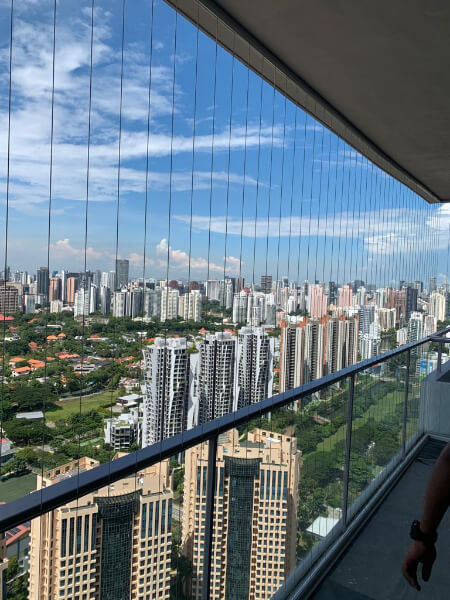
Matched to your MCST's approved colours and finishes, with the product details your management needs. Free on-site measurement and transparent nett quote.
Frequently Asked Questions
- Do I need MCST approval for balcony blinds or grilles? Almost always yes — anything that changes the façade's appearance needs written consent, even when no government permission is required.
- Do outdoor blinds and grilles need URA approval? Generally no. Blinds are treated as furnishing and safety grilles aren't balcony screens, so neither needs URA planning permission — but MCST by-laws still apply.
- Why does my condo specify colours? To keep the façade uniform. Using a non-approved colour risks being told to remove and redo the work at your cost.
- Can I enclose my balcony with glass? Usually not — balconies must stay semi-outdoor. Retractable screens and blinds that still ventilate are the normal compliant alternative.
- What if I skip approval? The MCST can require removal or redoing at your cost, and you may forfeit deposits. Written approvals protect you.
This article is general guidance for Singapore condo owners and not legal or regulatory advice. Rules vary by development and change over time — always confirm with your MCST, and with URA or BCA where structural or planning work is involved. For HDB flats, see our HDB renovation rules guide.