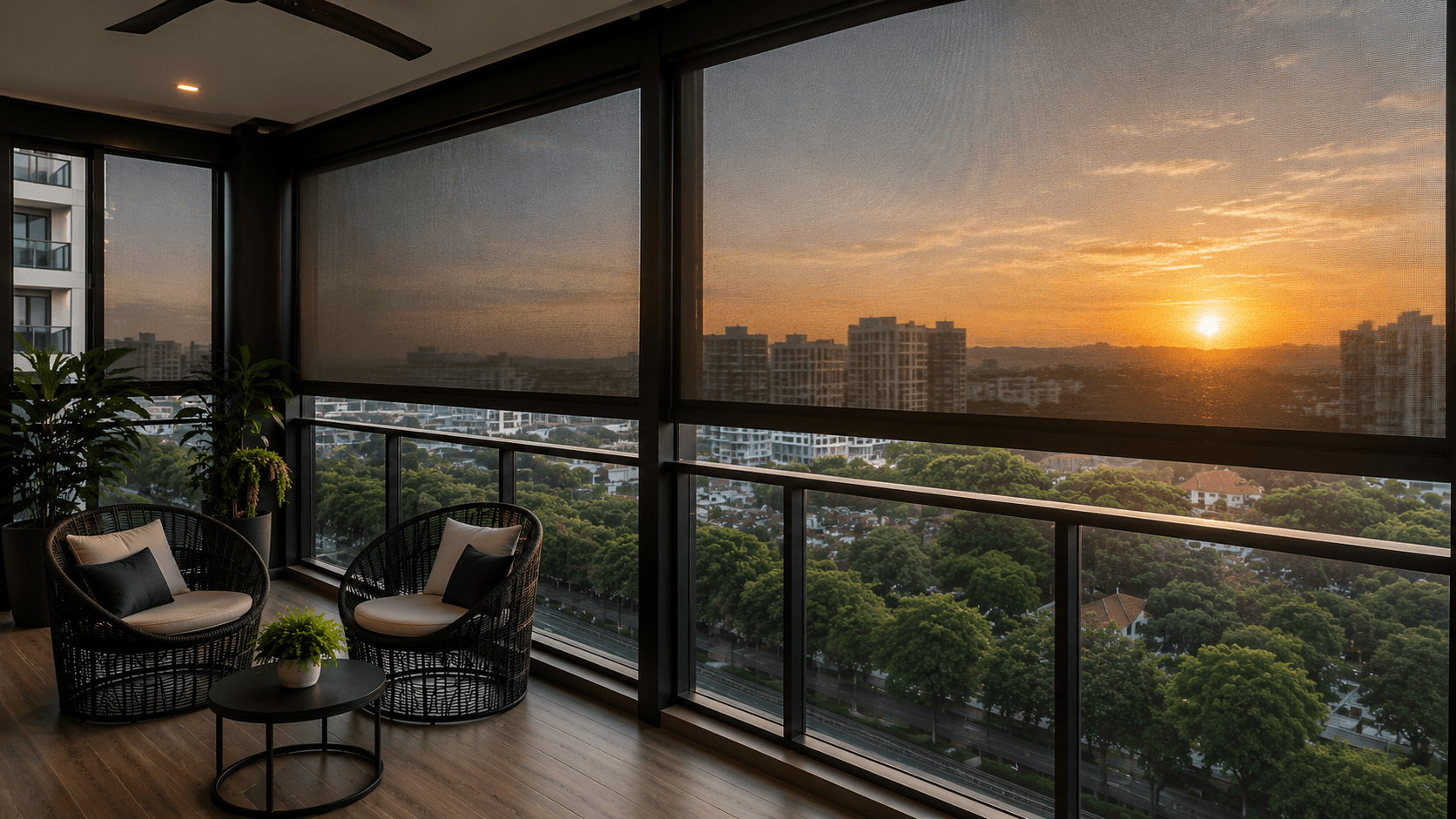
A west-facing balcony in Singapore is beautiful in the morning — bright, open, with a breeze. By 1pm it's a furnace. By 3pm, stepping out feels like opening an oven door. If this describes your home, you're not imagining it — and the problem is completely solvable.
Singapore sits 1.3° north of the equator. The afternoon sun on a west-facing balcony delivers extreme UV, intense radiant heat that raises indoor temperatures by several degrees, and glare that makes outdoor sitting genuinely painful. This guide covers what's actually happening and what fixes it.
Why West-Facing Is Singapore's Most Challenging Orientation
5–6 hours of peak solar exposure daily
The sun's path in Singapore means west-facing surfaces receive direct afternoon sun from roughly 12pm until sunset — the hottest, most intense part of the day. Unlike east-facing balconies (morning sun, shaded by noon) or north-facing (rarely direct sun), west-facing balconies absorb peak solar radiation during the hours you're most likely to be home.
- UV Index: Singapore's afternoon UV regularly hits 11+ — the "Extreme" category. 15 minutes of unprotected exposure during peak hours is enough to cause skin damage.
- Indoor temperature effect: An unshaded west-facing glass door or balcony raises the adjacent indoor room temperature by 3–5°C — a meaningful increase in AC load and electricity cost.
- Peak window: 1pm–6pm is the direct west-sun exposure window. This is exactly when most homeowners are at home or returning from work.
- Furniture and plant damage: Sustained UV exposure fades outdoor furniture significantly faster than any other orientation. Most plants (except full-sun species) cannot tolerate west-facing direct afternoon sun without shade.
Solutions That Work — Ranked by Effectiveness
⭐⭐⭐⭐⭐ Outdoor Roller Blind or Zip Track
The most effective solution. Intercepts solar radiation at the building perimeter — before it reaches your glass, your floor, or your indoor air. A UV400 blind reduces solar heat gain by 30–40%. Retractable, so you can open fully in the morning. Motorise for one-tap afternoon deployment.
⭐⭐⭐⭐ Solar Film on Glass Doors
Applied to balcony glass doors. Reduces the heat and UV entering your indoor space. Less effective than an outdoor blind (which stops radiation before it hits glass) but a worthwhile complement for glass areas not fully covered by the blind.
⭐⭐⭐ Strategic Planting
Large-leafed tropical plants provide partial shade and reduce surface radiant heat. Works best as a supplement to an outdoor blind — plants can't provide full coverage but reduce ambient balcony temperature noticeably when well-placed.
⭐⭐ Light-Coloured Flooring
Light grey or cream tiles absorb significantly less heat than dark charcoal, reducing surface temperatures. Composite decking is cooler underfoot than ceramic. Supplementary only — does not address direct solar exposure.
"The key principle is to stop the sun on the outside. An outdoor blind that intercepts radiation before it hits your glass is five times more effective than any solution applied to the inside of your doors."
— Casa Creativa Team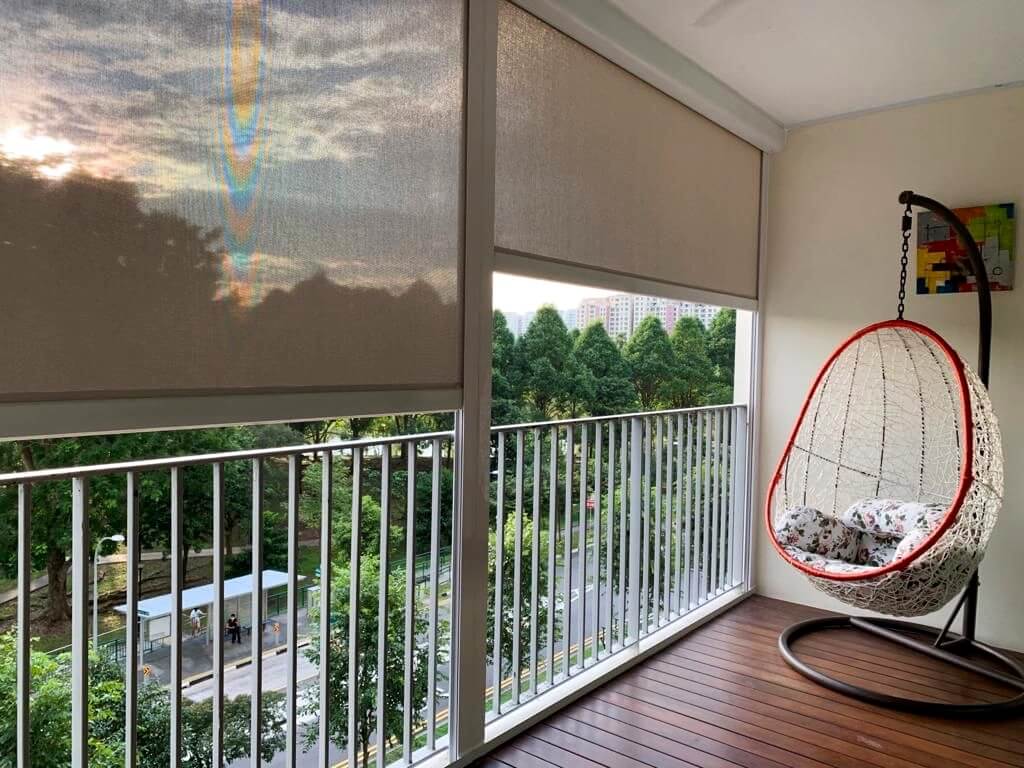
Protect your balcony in Singapore against sunlight, rain and lack of privacy - all while elevating your living space.
Choosing the Right Blind Fabric for West-Facing
Not all outdoor blind fabrics perform equally in west-facing afternoon sun. For high-UV, peak-heat conditions, fabric openness matters significantly.
| Fabric Type | Openness | West-Facing Suitability |
|---|---|---|
| Blackout | 0% | ✓ Maximum heat and UV block. Best for extreme west exposure or rooms needing full shade. |
| Dense Mesh | 1–3% | ✓ Near-blackout performance with some diffused light. The most recommended for west-facing balconies. |
| Standard Mesh | 3–5% | ✓ Good UV and glare reduction. Suitable for west-facing balconies where ambient light is still wanted. |
| Open Mesh | 10%+ | ✗ Insufficient for peak west sun — allows significant UV and heat through. |
| Clear PVC | N/A | ✗ No UV or heat protection. Suitable for rain only — not for sun management. |
| Translucent | N/A | ✗ Better suited to east or north-facing applications. |
For west-facing balconies, we typically recommend a 1–3% openness mesh in a neutral tone (sand, grey, or charcoal). Strong UV and heat performance, with enough diffused light to still see the view comfortably. Request a fabric sample at your site visit — colours and light transmission look very different in your actual conditions versus a showroom.
Plants That Actually Survive West-Facing Afternoon Sun
Most balcony plant guides are written for temperate climates. Singapore's west-facing afternoon heat is in a different category — here are species that handle it.
West-facing pots in Singapore's afternoon sun can dry out in under 24 hours. Self-watering pots with reservoirs significantly reduce watering frequency. Elevate pots to improve drainage — waterlogged soil after rain is as damaging as drought in our humidity.
The West-Facing Balcony Transformation Plan
- Step 1 — Install an outdoor blind with 1–3% mesh fabric: The highest-impact single change. Deploy from around 12pm daily. Retract in the morning for light and breeze. Motorise for one-tap afternoon deployment — or set a schedule via the app so it happens automatically.
- Step 2 — Add solar film to balcony glass doors: Even with an outdoor blind, some radiation reaches your glass at angles not fully covered. A quality solar film on the glass doors reduces indoor heat gain meaningfully, especially for rooms adjacent to the balcony.
- Step 3 — Choose light-coloured furniture and accessories: Dark outdoor furniture absorbs heat and becomes uncomfortably hot to touch. Light grey, cream, or white furniture reflects more radiation. Teak is an excellent choice — handles heat well and stays relatively cool.
- Step 4 — Add heat-tolerant plants: Plants transpire — they release moisture as part of photosynthesis, with a modest cooling effect on surrounding air. A row of bougainvillea or lemongrass along the railing also provides natural shading of the balcony floor.
- Step 5 — Use the space in the right windows: Even with all solutions in place, the sweet spots for a west-facing balcony are morning (7–11am) and early evening after 6:30pm. Plan outdoor meals and relaxation for these times — and use the blind to make the midday hours pleasant from inside.
West-Facing Balcony FAQs
How do I cool down a west-facing balcony in Singapore?
The most effective step is an outdoor roller blind or zip track with a 1–3% openness mesh, which intercepts solar radiation before it reaches your glass. Supplement it with solar film on glass doors, light-coloured flooring and furniture, and heat-tolerant plants.
What is the best blind fabric for a west-facing balcony?
For high-UV, peak-heat west-facing conditions, a 1–3% openness dense mesh in a neutral tone (sand, grey, or charcoal) offers near-blackout heat and UV performance while still letting you see the view.
Do outdoor blinds really reduce indoor heat?
Yes. An unshaded west-facing glass door can raise the adjacent indoor room temperature by 3–5°C. A UV400 outdoor blind reduces solar heat gain by 30–40% by stopping radiation at the building perimeter, before it reaches the glass.
Which plants survive a west-facing balcony in Singapore?
Heat-tolerant species that handle full afternoon sun include bougainvillea, ixora, lantana, lemongrass, cactus and succulents, and snake plant. West-facing pots dry out fast, so self-watering pots help.
When is a west-facing balcony actually usable?
The most comfortable windows are morning (7–11am) and early evening after 6:30pm. During the 1pm–6pm peak sun, an outdoor blind keeps the space pleasant to use or view from inside.